

Written by: Dave Bradshaw – WrestleTalk Magazine December 2020
I am gay. It might not seem like a big deal for someone to tell you that in 2021, but it’s certainly a big deal for me: even now, almost thirteen years into an amazing career as a play-by-play commentator and journalist on the European independent wrestling scene, this is the first time I have let it be known in public and I still feel a little bit anxious writing it.
While most (but not all) of my family and close friends have known for years and I have been fortunate to never face any negative reactions, it has still always felt a step too far to talk openly about it in the hypermasculine world in which I work.
Indeed, when I did tell a few close confidants in the industry about a decade ago, most of them agreed that it made sense to be cautious about how widely I shared the information.
All of them had my best interests at heart and shared the same fears for me that I had, some of which may be familiar to any wrestling fan who is a member of the LGBT+ community.
Principally I worried that people would think my only interest in watching men wrestle was a sexual one.
It seemed to me that straight fans watching wrestlers of the opposite sex are usually given the benefit of the doubt that their enjoyment is purely platonic, and that anyway there would be less stigma attached to any straight person whose fandom did seem to have a sexual edge.
After all, if a straight man commented in passing that he was attracted to a female wrestler, others would not necessarily jump to the conclusion that his reasons for being a wrestling fan were in some way seedy or inappropriate.
I doubted whether the same broad-mindedness would be so readily granted to gay fans.
Additionally, as someone who works on shows and sometimes shares a locker room with male wrestlers, I worried that some might have a problem with me being there if they knew my sexuality.
I was concerned that if influential colleagues were uncomfortable – however unfounded and prejudiced their concerns were – that it might affect my reputation and stop me from getting bookings.
To some degree, I still harbour those fears while writing this now.
Of course, the stakes in my case are pretty low: I am not a well-known name outside of the relatively small corner of the industry in which I operate, and as a commentator rather than a wrestler I don’t have the added anxiety of whether my opponents will be uncomfortable about the physicality of working with me inside a ring.
I am also fortunate that attitudes across society towards LGBT+ people have been shifting at an accelerating pace for the past several years – changes that have undoubtedly been reflected in the wrestling business.
Don’t get me wrong: my own situation has been more than enough to cause me plenty of angst through the years and even now it is scary to be open about it.
But my own journey to this point would never have felt possible if the trail had not been blazed by people much higher than me in this industry who therefore had much more to lose.
Both in the “major leagues” and on the independent scene, the past few years have seen an encouraging number of people who have found the courage – long before I did – to tell their truth.
Pat Patterson was one of a minority who found that courage even earlier, if not in public then at least among his peers, and found that he was mostly accepted for who he was.
Yet heel wrestlers have routinely tried to draw heat from audiences through the years by behaving in an effeminate way, and homophobic slurs have, until quite recently, been commonplace among live crowds.
This is surely one of the great paradoxes of wrestling’s history – that behind the scenes the industry has (at least sometimes) shown a tolerance and inclusivity that was way ahead of its time, while its track record of presenting positive LGBT+ characters and storylines on-screen has been mostly awful, even into the 21st Century. Why has that been the case, and is it still true today?
A quick disclaimer before we start trying to answer that question: here we will focus mostly (although not exclusively) on how gay male characters and performers have been treated.
That is absolutely not because the experiences of anyone else in the LGBT+ community are less valid but because, for example, the history of lesbian representation in wrestling is an important story in its own right, and one that deserves an author who is better placed to tell it.
Even by narrowing the focus like this, there is still an enormous amount that could be said and no article could hope to cover every significant gimmick or angle. That being said, let’s jump in…
DON’T SAY THE G-WORD

On November 11, 1947, the American industry changed forever with the national TV debut of ‘Gorgeous’ George Wagner.
Although straight in real life, the ‘Toast of the Coast’ decided to draw the ire of audiences by presenting himself as an effete narcissist.
His hair bleached blond and grown out into curls, he would strut to the ring wearing sequin-covered robes as classical music echoed around the auditorium, followed by a manservant who would spray perfume around the ring to sanitise it for his master.
He even handed out hairpins to women in the crowd if they swore allegiance to him.
It was all a not-so-subtle attempt to play into the insecurities of the time: his femininity, pompousness and sophistication were the antithesis of what counted for “macho” in the mid-20th Century, and yet he won many of his matches and gained female admirers.
It was an insecure straight man’s worst nightmare: a “sissy” who could beat you up and might be more appealing to your girlfriend than you are.
This was at a time when there really was no such thing as babyfaces and heels in the way that is so familiar today – almost all of Wagner’s notable contemporaries had clean-cut personas that were heavy on muscles but light on personality.
By making such a radical break from that tradition and deliberately trying to antagonize crowds, it is not much of an exaggeration to say that he was the man who pioneered the entertainment part of sports-entertainment.
Of course, he did it by perpetuating stereotypes and inciting deeply held prejudices for a reaction.
In wrestling parlance, the “heat” was generated through pure homophobia – but it worked, and it made Gorgeous George a household name.
Wagner’s success ensured that generations of heels incorporated parts of his act into their own personas: think of the robes worn by Ric Flair, the mirror-loving arrogance of an early Shawn Michaels, the perfume sprayed by Rick ‘The Model’ Martel, or any of a thousand other examples.

That is not to say that all of these men were presented as lacking toughness – indeed, the notion that a preening egomaniac like Flair could be a prolific womanizer and an accomplished wrestler despite not being a rugged “man’s man” provided yet another reason for fans to jeer.
Nonetheless, in some cases the insinuation about a character’s sexuality was clear, and the trend was spreading beyond the US scene: a lipstick-wearing Welshman called Adrian Street became a major star in British wrestling during the 1960s and ‘70s and is believed to have influenced David Bowie’s Ziggy Stardust character as well as a host of glam rockers.
Meanwhile, Mexico had its own tradition of androgynous characters which started at around the same time as Gorgeous George: ‘exóticos’ still appear in lucha libre to this day and are known for flirting with the referees, blowing kisses to the crowd and making sexual advances towards their opponents.
In contrast to the portrayal of such characters elsewhere, exóticos are often presented as fan favourites, although their sexuality is still intended as a source of comedy and ridicule.
Interestingly, it was rare in all of these cases for any character’s sexuality to be explicitly stated by announcers, with most promotions choosing euphemisms that offered a wink and a nod to the audience.
Gorgeous George was “flamboyant”, Adrian Street was “exotic”, Adrian Adonis was “adorable” – but you would be hard-pressed to find anyone labeled straight-forwardly as “gay”.

They didn’t need to be: it was an unspoken understanding between wrestling promotions and their audiences that anyone who seemed feminine must be gay, and that no one who was a “real man” could ever be attracted to men.
In this regard, wrestling was perhaps no better or worse than most mainstream entertainment in the 20th Century, which tended to present gay characters exclusively as camp, over-the-top and obsessed with lewdness.
Speaking from personal experience, this could be one of the most confusing and damaging wounds inflicted on adolescents trying to figure out their sexuality – no doubt an untold number of young people struggled to figure out their place in the world as someone who was not attracted to the opposite sex but did not fit the mold of how a gay person was meant to feel or behave.
For many, it will have been a torturous process. It certainly was for me.
Still, if LGBT+ fans had hoped that promotions would be less reluctant to admit the gayness of their stereotyped characters then by the end of the century perhaps they should have been careful what they wished for.
The arrival of Goldust in the WWF in 1995 seemed at first to be just another variation on the same theme: his look was clearly inspired by drag queens, his promos were laced with innuendo, and he was constantly booked to behave in a way that was presented as deviant and predatory.

On one occasion he gave an unconscious Ahmed Johnson mouth-to-mouth while Vince McMahon on commentary screamed that it was “the most revolting thing I’ve ever seen in my life!”
Another time, as they built to their match at Wrestlemania XII, Roddy Piper started an in-ring promo by asking his golden rival “What exactly is your major malfunction, you fruitcake?” and ended the same segment by promising “I’m gonna make a man out of you!”
At first, the presentation was par for the course: Goldust was frequently described as “bizarre” and commentators wondered aloud if his act was really all about playing “mind games” rather than – heaven forbid – actual same-sex attraction.
But then something changed: by the end of 1996 Goldust was on the road to a babyface turn and, with the WWF on the cusp of the Attitude Era, a decision was clearly made to address the question of the character’s sexuality head-on.
In an incredibly uncomfortable in-ring confrontation Jerry ‘The King’ Lawler outright asked him why he cared about another wrestler pursuing his “director” Marlena and asked if he was, “y’know… well… queer?”
Goldust answered emphatically “No” and knocked Lawler to the ground. It seemed as though Goldust was only able to turn into a fan favourite if he performed a kind of reverse coming-out: as a fully heterosexual hero defending his lady’s honour, no-one need feel uncomfortable cheering for him.
That didn’t stop the inflammatory language from Lawler though: a few months later in an interview he claimed Goldust’s father Dusty Rhodes didn’t love him because he “went around the ring kissing men like a flaming fag.”
At least fans were no longer being asked to use this as a reason to boo – but the language was still a new low.
FROM BAD TO WORSE

Unfortunately, history would repeat itself a few years later. At the end of 2001 Billy Gunn, already famous for his ‘Mr Ass’ gimmick, began teaming with Chuck Palumbo and it quickly became apparent that the two men might be more than just tag partners.
They started wearing matching headbands and tight-fitting red trunks; they helped each other with intimate-looking stretches in the locker room; they regularly admired each other’s bodies and adopted sexually suggestive positions with each other while the crowd booed them during an in-ring posedown against Stacy Keibler and Torrie Wilson.
They even recruited Rico, a wrestler promoted from developmental territory OVW, to portray a walking gay cliche as their “stylist.”
Most weeks they were used in lame efforts at humour based on their not-so-ambiguous feelings for each other – the same kind of nonsense that had been seen in a hundred other gay gimmicks that preceded it.
But then suddenly, after a match on Smackdown one Thursday night, WWE upped the stakes: Chuck got down on one knee, pulled a ring from his trunks and asked Billy to become his “partner for life” in a commitment ceremony.
Gunn said yes, a smattering of boos filled the arena, and so began one of the oddest weeks in the company’s history.

Despite the way in which the team had been portrayed for the previous nine months, the Gay & Lesbian Alliance Against Defamation (GLAAD) embraced the storyline as a landmark moment in television history and helped WWE to garner mainstream attention.
Billy and Chuck were interviewed on NBC’s Today show, featured in TV Guide and Variety magazine, and described in a New York Times article as “accidental crusaders”.
No alarm bells seemed to ring about how the company presented its LGBT+ characters even when, during the same week, Raw promised viewers “Hot Lesbian Action” which turned out to be two young women stripping in-ring and kissing each other for the fans’ entertainment until a heavyweight male tag team called 3 Minute Warning interfered and brutally beat them both up.
In hindsight perhaps we should have all seen the twist coming when the commitment ceremony finally aired on September 12, 2002.
First, the Godfather interrupted with his “ho train” to try and help Billy and Chuck remember how great women are.
That didn’t stop the proceedings, but moments later as the union was about to be confirmed both men got cold feet, explaining it was a publicity stunt that had gone too far and saying “We’re not gay!”
The live crowd was shown cheering and celebrating this turn of events, which concluded with 3 Minute Warning showing up again to beat everyone up, because why not?
GLAAD claimed WWE had lied to them, Billy and Chuck’s team ended soon afterwards, and once again pro wrestling told its audience that it had no place for openly gay characters.
To be fair to WWE they were far from the only offenders – in fact the Billy and Chuck fiasco wasn’t even the worst thing that happened in the industry that year.

On February 23, 2002, a new independent promotion called Ring of Honor held its inaugural event, and the very first “match” in company history remains the worst thing I have ever seen on a wrestling show.
An overtly camp tag team called the Christopher Street Connection (named after the New York street that represents a worldwide symbol of gay pride) arrived, clad in feather boas.
Commentators Eric Gargiulo and Steve Corino reacted with rage: Corino said that if they wanted to behave in such a way they should do it in the parking lot so that no-one would have to see it, while Gargiulo said it was “disgusting” to see one of them kiss a male fan.
Once in the ring the duo, named Buff E and Mace Mendoza, announced on the mic that no-one wants “our kind” in ROH (both commentators immediately agreed) before renaming the company “Ring of Homosexuals” and starting to make out with each other.
The crowd started aggressively chanting the word “Faggots” and Gargiulo expressed regret that he was contractually unable to shout along with them.
At that point, a team called Da Hit Squad, a pair of heavyweights not dissimilar to 3 Minute Warning, hit the ring and decimated the pair before putting their valet Allison Danger through a table while the commentators bet that she now wished she had managed a straight team instead.
The footage has wisely been edited out of the show on the company’s on-demand service, as has a similar segment on a subsequent show, but 19 years later it should still shame everyone involved – it was so viciously homophobic that it is upsetting to imagine how much untold psychological damage it might have caused to LGBT+ people, or how much violence it might have incited.
Of course, fans were not the only ones who could be affected – the impact of working in an industry with a track record like this could undoubtedly take a toll on anyone.
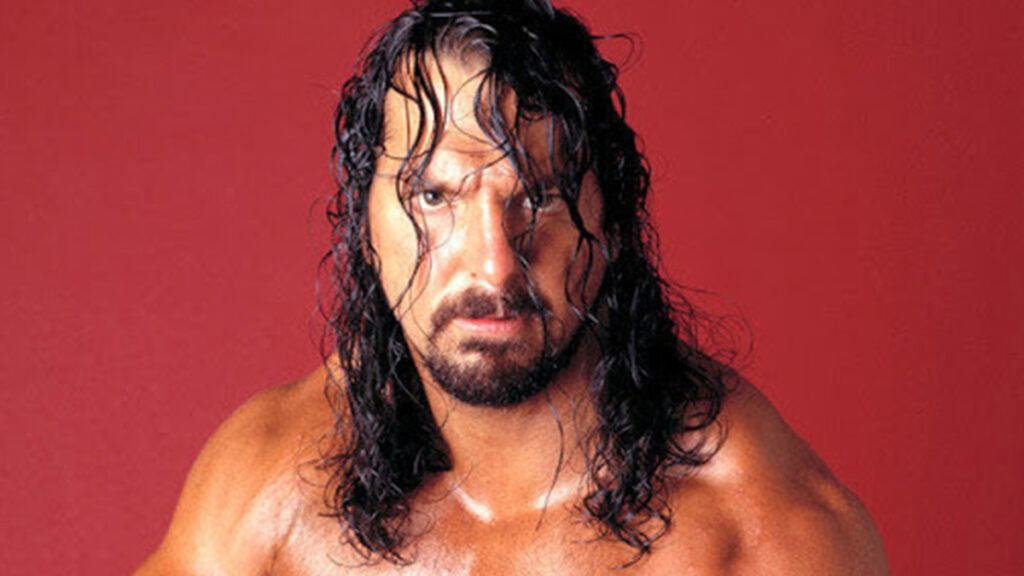
Chris Kanyon’s case is particularly harrowing: debuting in 1992, he was gay but remained closeted to all but his closest friends throughout most of his career.
Eventually becoming a regular in WCW, he went to great pains to keep his sexuality hidden, and on one occasion when a sexual partner recognised him from television, he even threatened violence if the guy went public.
Other wrestlers noticed Kanyon’s lack of interest in women and occasionally asked him if he was gay but he always denied it.
That did not stop rumours circulating, and by the time he arrived in WWF in 2001 word had apparently spread to Vince McMahon, who approached him with an idea for a new gimmick.
According to Kanyon’s autobiography, the boss asked him to “accentuate the wrist a little” while bending his wrist to demonstrate.
“You have a very… unique way of speaking. You need to be very over-the-top and flamboyant… you know what I’m saying?”
Kanyon felt McMahon was trying to humiliate him and was asking him to be something he wasn’t, but agreed to give it a go.
He explained that after a few weeks of working on the character with one of the company’s writers it was clear the idea was not working and it was dropped.
Sadly that was not the end of it. While recovering from an injury in 2002 Kanyon began to develop a new character for himself that would be gay but macho, breaking with the normal stereotypes.
In his book he claimed that he came out to three wrestlers in order to pitch the idea, but that two of them then spoke to WWE management without his consent and the idea received no enthusiasm.
Instead, once he was ready to return something quite different was planned. On the 2003 Valentine’s Day edition of SmackDown, Kanyon emerged from a literal closet that was set up in the ring as a “gift” from Big Show to the Undertaker.
Dressed up like Boy George for reasons unknown, Kanyon had been instructed to sing one of the pop star’s songs as he emerged until Taker beat him to a pulp with a steel chair – an attack that Kanyon claimed gave him a legit concussion.

“Afterward, I was convinced the whole set-up, including the beating, was deliberate,” he wrote. “I thought it was a message from McMahon: We don’t want you – or your kind – here.”
Although Kanyon agreed to do the gimmick he later claimed that he felt uncomfortable about it but feared he could be fired if he turned it down.
Afterwards he even asked to continue with it (an effort to gain a measure of control over his situation, by his account) but it was scrapped anyway and his WWE career never recovered.
Kanyon clearly felt that management lost interest once he seemed comfortable continuing with the gimmick: “I’m convinced that I turned the tables on them. When I said I was comfortable with the idea, I wasn’t fun to torment anymore, so they did not allow me to do it.”
Before describing what happened next it’s important to say that Kanyon’s account of these events is disputed.
Later in life, he was diagnosed with bipolar disorder and displayed a pattern of erratic behaviour in the years that followed.
Several people familiar with the situation have claimed that his career stalled because of poor conduct and insufficient talent, rather than because of discrimination related to his sexuality.
Whatever the truth, the tale is a tragic one: in September 2003 Kanyon attempted to commit suicide but thankfully survived.
He was released from his WWE contract in early 2004 but after a brief retirement he returned to the independent scene where he declared on a show in February 2006 that “Chris Kanyon is a homosexual.”
His intention was to become the first high-profile wrestler to be openly gay while still an active performer but unfortunately the announcement was botched: after the match he obfuscated about whether he was coming out in real-life or whether it was just his character that was gay.
Although he clarified matters with a press release a few days later, fans were left confused as to whether the whole thing was a work.
Kanyon retired again in 2007 and released his autobiography during the final year of his life, explaining why he felt he was released from WWE for being gay and describing how he had struggled with his sexuality and with mental illness throughout his career.
On April 2, 2010, Chris ‘Kanyon’ Klucsarits committed suicide in his New York apartment. He was 40 years old.
FINDING ACCEPTANCE

Obviously the picture painted here so far is of an industry with a bleak history in terms of how it has presented LGBT+ characters and themes to its audiences and, at least in some cases, how that presentation has made performers within the industry feel about themselves.
Fortunately though, Kanyon’s account does not seem typical of how co-workers have historically behaved behind the scenes towards wrestlers who were either openly gay or presumed to be gay.
On the contrary, a lot of such wrestlers’ experiences seem to have been broadly positive: for many decades gay wrestlers have at worst been tolerated in locker rooms, and at best have been openly embraced.
Perhaps the most famous example of such a positive story comes from the legendary Pat Patterson, whose death in December has prompted plenty of reflection on his remarkable life.
While it is true that Patterson sometimes felt it prudent to be discreet about his sexuality, he also found acceptance among those who knew.
People who helped him break into the business such as Mad Dog Vachon and Verne Gagne found their initial prejudices disappear as they got to know Patterson and his partner Louie.
Long-time tag partner Ray Stevens accepted Patterson without question, as did both Vince McMahon Sr. and Jr. when he worked for them.
Patterson has even described making subtle references to being gay in his promos to get a laugh from his colleagues.
“That’s why I never had any issues while with WWE when my friend Gorilla Monsoon or others would poke fun at me while doing commentary,” he explained in his autobiography. “I was in on the laugh from the beginning.”
It wasn’t always plain sailing. In the early 1990s while he was a senior executive for the WWF he was among three company employees accused of sexual harassment by a number of young male wrestlers and members of the ring crew.
Patterson was never charged with any wrongdoing and was later cleared by a company investigation.
While the truth may never be known with absolute certainty, most of those close to the situation clearly believe that he was unfairly assumed of being involved with the misdeeds of others.
Patterson himself felt deeply wounded by the accusations and later wrote that “the fact that I was gay certainly played a part in me being targeted like that.”
He briefly resigned from the company but soon returned and continued to work there for many years.
In 2014 on Legends’ House, a reality show produced for the new WWE Network, he acknowledged for the first time on camera that he was gay.
Even though this did not come as a surprise to anyone it was still an emotional moment and helped to confirm a sea change in the industry’s public acceptance of LGBT+ talent – a change that had been set in motion the previous year when, for the first time ever, a WWE wrestler on the active roster had come out as gay.
It was a moment that was as courageous as it was sudden.
At the start of SummerSlam weekend in 2013, Darren Young (real name Fred Rosser) was stopped for an interview at Los Angeles airport by a TMZ reporter who asked him if he thought a gay wrestler could be successful in WWE.
“Absolutely, look at me!” replied Young. “I’m a WWE superstar and to be honest with you, I’ll tell you right now, I’m gay and I’m happy!”

The apparently spontaneous revelation was warmly received by the key names in the company: Young said that he was immediately embraced by Stephanie McMahon and Triple H when the news broke, and that Vince McMahon spoke to him for 20 minutes, reassuring him that everything would be alright and that the company supported him.
In interviews over the course of the weekend, several top WWE stars also offered their support: Randy Orton described the news as “awesome” and added “it’s OK to be gay, it’s no big deal”; John Cena said he was proud of Young for making such a bold move, adding that his own oldest brother is gay and is openly accepted by his family; Big Show commended his courage and predicted he would find a lot of love and support from his colleagues and fans.
Young was soon appearing on Good Morning America and the Ellen DeGeneres show, where once again the response was overwhelmingly positive.
It was a moment not entirely without precedent: years earlier Orlando Jordan openly described himself as bisexual on his Facebook page and had reportedly pitched a character to WWE management that would allow him to express that on-screen – a version of which he ended up doing in 2010 after he had moved to TNA.
Still, Young’s announcement was the first for an active roster member who identified as gay, and for LGBT+ followers of pro wrestling, it felt like an immensely life-affirming few days.
It also seemed to clear the path for the next generation of talent in the company to be more open about their sexuality: nowadays Shayna Baszler, Sonya Deville, Jake Atlas, Tegan Nox and Piper Niven are all openly LGBT+ while working for WWE.

Meanwhile, Finn Balor’s WrestleMania 34 entrance, during which he was accompanied by members of New Orleans’ LGBT+ community, was another sign of the company’s present-day determination to send an inclusive message.
The arrival of AEW over the past two years has broken barriers too: their signing of Nyla Rose in February 2019 was the first time an openly transgender wrestler had joined a major promotion, and her women’s title win a year later made her the first transgender wrestler to win a major world title.
The company has also prominently featured Sonny Kiss, a gender-fluid wrestler whose character is a still-too-rare case of an LGBT+ person portraying a character that is authentic to their true selves.
Most recently, in November AEW signed tag team The Acclaimed – one of whom is Anthony Bowens, an openly gay young athlete who runs a popular YouTube channel with his boyfriend.
A BRIGHTER FUTURE

Other well-known companies also seem to have become more comfortable in recent years with presenting characters who are at least implied to be something other than straight.
Today’s Ring of Honor has come a long way since that horror show of a beginning in 2002, having featured the androgynous Dalton Castle as a babyface for much of his run, including a six-month spell as world champion in 2018.
Meanwhile, the success in NJPW of Kota Ibushi and Kenny Omega – collectively the Golden Lovers – during the past decade felt ground-breaking, even though the nature of the duo’s relationship was never explicitly stated.
Of course, while both of these examples indicate important signs of progress they are still cases of (apparently) straight performers portraying characters who are not straight.
It has often been in smaller, independent promotions where wrestlers who are LGBT+ in real life have felt most able to experiment with characters that reflect who they really are.
In the US there are now multiple LGBT+ characters and even a couple of promotions that are dedicated to featuring performers from within the community.
The most recent example was during GCW’s rescheduled ‘The Collective’ weekend in October, where popular indy star Effy hosted his “Big Gay Brunch” – a celebration of the talent and diversity within the scene.

The UK scene has also been ahead of the curve on this issue, with multiple LGBT+ performers and characters in recent years.
A new promotion named Pride Pro Wrestling has plans to debut at London’s Pride festival in summer 2021 (COVID-permitting, of course) and will feature exclusively LGBT+ performers and crew.
“I couldn’t imagine that kind of thing happening a few years ago,” said Reese Ryan, a 22-year-old gay wrestler who is a brand ambassador for Pride Pro.
“I’m so happy to be involved and on that roster. It will be an amazing feeling to be part of that.” Ryan’s own journey in the industry has been a complicated one.
Worried about being shunned by his peers, he nonetheless came out to those at his training school four years ago and experienced mostly positive reactions.
Nonetheless, for a long time he maintained that his wrestling character was straight – a fact that he attributes to some latent resentment that he still harboured about his real-life sexuality.
In early 2020 he changed that policy, openly pushing that his in-ring persona was gay too, and he says it turned out to be a small but important change:
“It’s not that I go out and do anything different to what I did before, but [it’s important] just knowing that I could in some way be a role model for someone who’s not comfortable with themselves. I basically want to be the wrestler that I would have needed when I was coming out.”
Ollie Burns, whose alter ego Priscilla ‘Queen of the Ring’ is also on the Pride Pro roster, has been on a journey spanning almost two decades in British wrestling.

First starting to train in 2002 at the age of 12, he came out behind the scenes at the age of 17 and soon started adding more camp and outlandish elements to his character.
The response was mixed from colleagues and audiences alike: a veteran wrestler tried to throw him out of a locker room on one occasion before a show, only to apologize in front of the roster after seeing him perform, while a crowd at one show in a working men’s club was so hostile that Burns wondered if he might need to be escorted through the car park afterwards for his own safety.
More often, though, the problems he experienced were more subtle – backstage “banter” that was usually mild enough that he feared being thought of as oversensitive if he complained about it.
He embraced the acerbic drag queen persona of Priscilla as a way of dealing with that: “It’s my way of joining in with it when the guys are making jokes,” he said. “I’ve turned myself into a joke, except I’m taking that joke very seriously.”
That being said, if the character began as a form of emotional armour, over time Burns has become more comfortable in Priscilla’s skin:
“Last year I got some sparkly boots and I got tits for the first time – oh boy am I proud of them! I invested a few hundred pounds to help me feel good, and now it’s a bit of a party. I’ve started to really relax and enjoy the character.”
This hints at an important point: even characters that play into stereotypes can sometimes be empowering, both to the performers portraying them and the fans watching them.
For example, despite all of its flaws, the Goldust character was one that Burns did not see as entirely negative when he was growing up – in fact it helped to inspire him.
“To think that you could be this overpowering masculine character but also wear make-up and have these ridiculous feathers and a wig on, it blew my mind,” he explains. “It created a lifelong fascination with mixing wrestling and gender play.”
While he later found elements of the Goldust character to be frustrating, this admission shows that things are much more complicated than camp, flamboyant gay characters being bad and macho, “straight-acting” gay characters being good – why after all should all gay characters conform to the heterosexual norm of what a tough wrestler is supposed to be?

The key here is variety: it’s not that Gorgeous George, Goldust or even Chuck and Billy are problematic per se, but rather that they become problematic when their heelish, over-the-top caricatures are the only type of gay character that ever gets presented, so that viewers are conditioned to believe that all LGBT+ people deserve either laughter or derision.
At its heart professional wrestling has always had a pretty conservative worldview: the heroes have always been the athletic heartthrobs wrapped in a flag and espousing traditional family values, while the heels have often been anything that seems like a threat to that ideal.
The foreign menace wanting to destroy our way of life, the criminal trying to steal success from those who have earned it fair and square, or – in the case of LGBT+ characters – the effeminate deviant undermining the very idea of what it means to be a “real man”.
Just as the rest of society has realized over time that the world is much more complicated, the entertainment presented to the public by our industry has made reluctant, inconsistent moves in the same direction.
Yes, this slow on-screen progress is particularly frustrating given that the same industry has often been unexpectedly accepting to LGBT+ performers behind the scenes, but it is progress nonetheless and its speed has been accelerating in the past few years.
“I can’t stress enough how much the mindset of everyone has changed,” says Ryan. “I remember feeling vulnerable, but I don’t feel anything like that now. If anything I feel celebrated. I wish I could go back and tell my younger self that it’s all going to be alright.”
That optimism does not seem misplaced: after a torrid history, it finally seems as though pro wrestling is headed in a direction where LGBT+ characters are going beyond stereotypes to reflect the huge range of shapes, sizes and personalities that really exist.
The industry is becoming a place wherein the very near future, no real-life performer or in-ring character will have any reason to fear negative consequences if they are bisexual or transgender, or if they utter those three words with which I began this article: “I am gay”.
LGBT+ RIGHTS IN WRESTLING’S BIGGEST HOTSPOTS
Part of the problem for LGBT+ wrestlers and fans through the years has not just been that they risked negative judgments from their peers, but also being stigmatized or even criminalized by society at large.
Some of the most archaic rules were revised more recently than you might think and, even now, some of pro wrestling’s traditional hotbeds still have a way to go.
UNITED STATES: In 2003 the Supreme Court ruled that same-sex sexual activity was permitted by the Constitution, prior to which it had been illegal in 14 states.
Some of those states still have not revised their own laws accordingly, and police have been known to enforce local statutes banning such activity to this day, even though this is unconstitutional.
Massachusetts became the first state to legalize same-sex marriage in 2004 followed by 34 other states, and the Supreme Court mandated that the remaining 15 do the same in 2015.
LGBT+ people were not permitted to openly serve in the armed forces until 2010, and transgender people were only permitted in 2016.
Surveys show that while public opinion is now largely supportive of LGBT+ rights, it varies widely by region and still trails much of Europe on average.
Discrimination against transgender people remains particularly widespread.
UNITED KINGDOM: “Homosexual acts” have always been legal for women and were decriminalized for men in England and Wales in 1967, although with stricter conditions than for straight people until 2003.
In Scotland and Northern Ireland decriminalization only happened in the early 1980s.
Civil partnerships were permitted nationwide in 2005 and were followed by full same-sex marriage in 2014 (although only in 2020 in Northern Ireland).
That being said, most churches still refuse to conduct such ceremonies and are not legally required to do so.
The Thatcher government introduced ‘Section 28’ in 1986, prohibiting schools from teaching “the acceptability of homosexuality as a pretended family relationship” to their students.
This was repealed in 2003. Transgender people have been able to legally change their gender since 2005.
MEXICO: Sexual conduct in private has been legal in Mexico for LGBT+ couples since 1871, although laws against public indecency or immorality have sometimes been used to prosecute people.
Anti-LGBT+ violence has increasingly been an issue in recent decades, with the high number of unsolved cases blamed by some on a lack of police interest in pursuing justice.
Transgender people in Mexico City have been legally allowed to change gender since 2004, but only 13 of the country’s other 31 states have since followed suit.
Over half of the states allow same-sex marriage, and a Supreme Court ruling in 2015 has ensured the remainder must recognize marriages performed elsewhere in the country.
In 2003 Mexico became only the second country in Latin America to provide legal protections against discrimination for LGBT+ people, after Ecuador.
JAPAN: The culture and major religions of Japan have historically been somewhat tolerant of same-sex sexual activity, which was only illegal for eight years from 1872.
That being said, the country’s record is poor in other respects: marriage is still legally defined as being between a man and a woman, and same-sex marriages that happened in other countries are not legally recognized either.
Gay couples also cannot adopt and have fewer rights than their straight counterparts.
Discrimination on the basis of sexuality or gender identity is not included in the nation’s civil rights laws, meaning there is little action that can be taken if – for example – someone is denied a job due to being gay.
Transgender people have been able to legally change their gender since 2004, but to do so they must be sterilized and undergoing sex reassignment surgery.
A survey in 2018 showed that 65% of LGBT+ people in Japan said they had not come out to anyone, either at work or at home.
For more articles like this, make sure to check out the WrestleTalk Magazine, available here.
To make sure you stay updated with all the latest wrestling news, add WrestleTalk.com to your Google Discover feed and follow us on Twitter!



Comments.
Loading comments…