
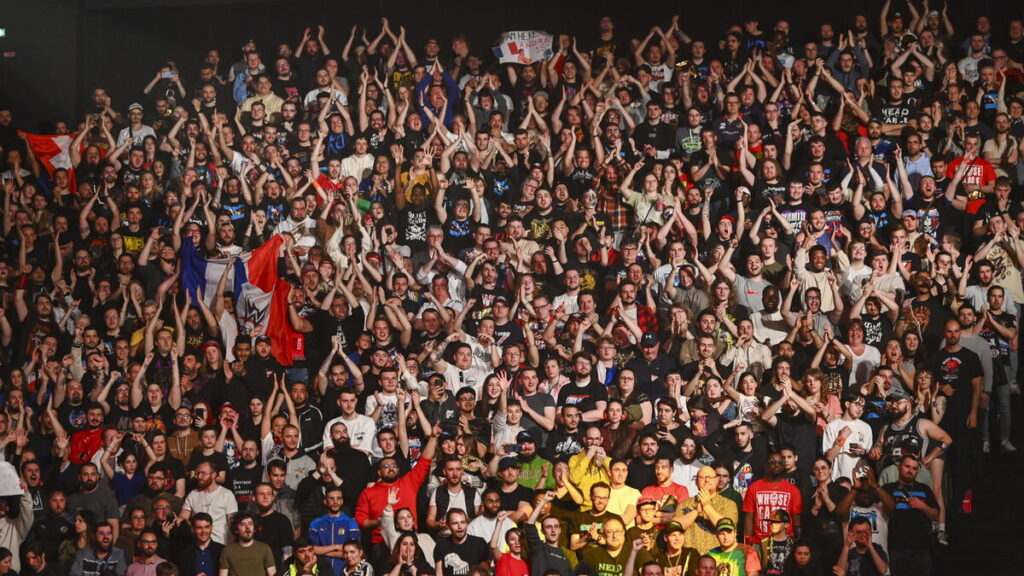
There was a time when wrestling lived on the fringes of television, being dismissed as noisy theatre for a niche crowd. Today it sits beside blockbuster movies on streaming homepages, fills stadiums for entire weekends and inspires games. That journey was no accident. A handful of smart moves, from global distribution to relentless fan engagement, turned a weekly show into a year-round entertainment brand.
When The Ring Meets The Reels
There are few things that prove a brand has outgrown its niche quite like a licensed slot. Microgaming’s WWE Legends: Link & Win puts icons such as The Undertaker and Stone Cold Steve Austin on the reels, and it’s billed as one of the most popular themed slot games online from the wrestling universe. Realtime Gaming’s Lucha Libre comes at it differently, celebrating wrestling via Mexican Masks with a Fist of Fury bonus round.
Titles like these borrow the spectacle wrestling has always sold, and both show its imagery travels far beyond the ring. Video games such as the WWE 2K series play a similar role, acting as a playable archive of legends and current stars. Slots reflect how modern fans behave. They rarely watch in a single sitting and will drift between the show, a second screen and other forms of entertainment throughout the same evening.
Streaming Opened The Door
The biggest shift came when WWE moved Raw to Netflix. Weekly wrestling suddenly sat beside hit movies, dramas and documentaries, with no cable package required. Netflix has reported that members are streaming over 500 million hours of WWE programming, reaching 165 countries in over 20 different languages. A curious viewer can click on a familiar face and be hooked by the following week’s cliffhanger. That’s how casual curiosity turns into a weekly habit.
Live Events And Social Reach
Streaming also provides reach, but live events are what prove the appetite. WrestleMania draws in huge numbers each year, with fans willing to travel from far and wide to be there to watch the action unfold live. Many will book flights, some international, and hotels, purely to watch the wrestling, which shows it’s going from being a niche event to a huge mainstream show.
Social media then helps to blow up every big moment. WWE has hundreds of millions of followers across all platforms, and on WrestleMania weekend, billions of views will be generated. One live event turns into a weeks-long conversation, which is clipped and debated long after the show has finished.
Global Styles And Local Heroes
Wrestling also travels well because it does a great job of adapting. Japan’s hard-hitting style, Mexico’s masked aerial tradition and the character-led spectacle of American television all feel distinct, yet they now share the same screens. Performers move between promotions, and fans will follow them, so a viral clip of a luchador can lead a viewer straight to a major WWE or AEW card.
Conclusion
The real advantage that wrestling has right now is its calendar. Weekly television, premium live events, podcasts, merchandise and games all keep fans engaged year-round, so there’s always another story to follow or reason to check the latest news. That constant flow gives media partners fresh programming every week, which is why the biggest platforms compete to host it. Wrestling didn’t go mainstream by chance; it forced its way into the spotlight by playing to its strengths.


Comments.
Loading comments…