
The following is reprinted from Issue 3 of WrestleTalk Magazine.
The latest issue of WrestleTalk Magazine (Issue 6) and all back issues and subscriptions are available now at WrestleTalk.BigCartel.com
#KeepWrestlingPrintMediaAlive
Did WWE’s 90 day no-compete clause stem from Raven being released by WWE on January 20, 2003 and showing up in TNA two days later? – Shane Mullaney
No, the clauses existed way before that.
When Ric Flair asked for and was granted his WWF release a decade earlier in February 1993, he was unable to wrestle on WCW programming for several months after returning to the group because of a no-compete. Conversely, others after Flair, including Madusa, Rick Rude, Kevin Nash, Scott Hall and Lex Luger, were all able to switch sides without restriction.
After Raven made the move to TNA in 2003, there were others (such as Kurt Angle) who jumped ship without enduring the obligatory cooling off period. It all depends on the nature of the release. A contract expiring allows a performer to work wherever they want immediately, whereas receiving an early termination (the infamous “future endeavours”) usually contains within it the 90-day no-compete.
There are still exceptions to that rule as well. A released bone-bender can forgo the three months paid holiday and return to the ring right away if they so choose, though most, for obvious reasons, opt to take the money and a much-needed break instead. When Alberto Del Rio was fired in 2014, his lawyers contested the no-compete and won, which allowed him to work for AAA the following month.
At the 1994 Royal Rumble, commentator Vince McMahon stated that wrestlers would enter the ring every 90 seconds due to time restrictions, but is it possible that there was another reason they reduced the frequency from two minutes? And on that note, what was the rationale behind having entrants enter every 60 seconds at the 1995 Royal Rumble? – Stephen Parry
It was largely down to the reduced quality of the competitors, plus the stories the company wanted to tell.
By 1994 the roster was lacking in star power so the WWF reduced the Rumble time to retain audience interest when the likes of Virgil, Kwang, and Mo were clogging up the ring. The company went to the extreme of 60 seconds in 1995 because the talent pool was even thinner, especially with the biggest stars Bret Hart, Diesel, Razor Ramon, and The Undertaker competing on the undercard and not in the Rumble match.
The WWF also wanted to tell the story of Shawn Michaels and Davey Boy Smith entering at numbers #1 and #2, then lasting until the end before Michaels won. They felt the premise could not be sustained as easily in a longer match, so they reduced it right down to kill two birds with one stone. The result was an entertaining sprint of a match that never got boring, despite some of the woeful participants.
After flirting with two minute intervals again in 1996, the company decided that 90 seconds was the optimum time for reducing dead spots and keeping the flow of the bout moving. They have gone back and forth since, though in truth, the times are rarely accurate anyway.
Since the very first Rumble back in 1988, the promotion has added and shaved time depending on what is going on in the ring. In ‘88 they blitzed through the entries, getting everyone to the squared circle in just 27:30, when it should have taken 36:00. On the other extreme, there was a colossal 3:21 between the arrival of #21 entrant Randy Savage and #22 The Berzerker in 1992. Curiously enough, the time between Mick Foley’s arrival in the same spot as Savage in 2004 and Christian at #22 was also over three-minutes.
What were the reasons for Jake Roberts’ departures from WCW in 1992 and the WWF in 1997? – Stephanie Edwards
Jake had problems in WCW from day one.
Having held up Vince McMahon for his WWF contract release at WrestleMania VIII (by refusing to work his match with Undertaker unless McMahon let him leave) because he had agreed a deal with WCW that would pay him $750,000 per annum, Jake turned up in Atlanta to find that Bill Watts had taken over from deal-broker Kip Frey. Watts balked at Jake’s gigantic contract, tearing it up in front of him.
With his WWF bridges burned because of the WrestleMania stunt, Roberts had no choice but to take a far lower deal than had originally been promised. Roberts and Watts despised each other, with the latter waiting for any excuse to fire him from the company. When Roberts failed a drugs test and missed house show dates five months into his deal (because he had checked into a Betty Ford rehab clinic), Watts fired him, citing the missed days and test failure as a contract violation.
Following his WWF return in 1996 (in both a wrestling and backstage role), Roberts lasted little over a year before receiving his marching orders. This time he was canned after taking a rental car and disappearing for two days, which caused him to miss shows.
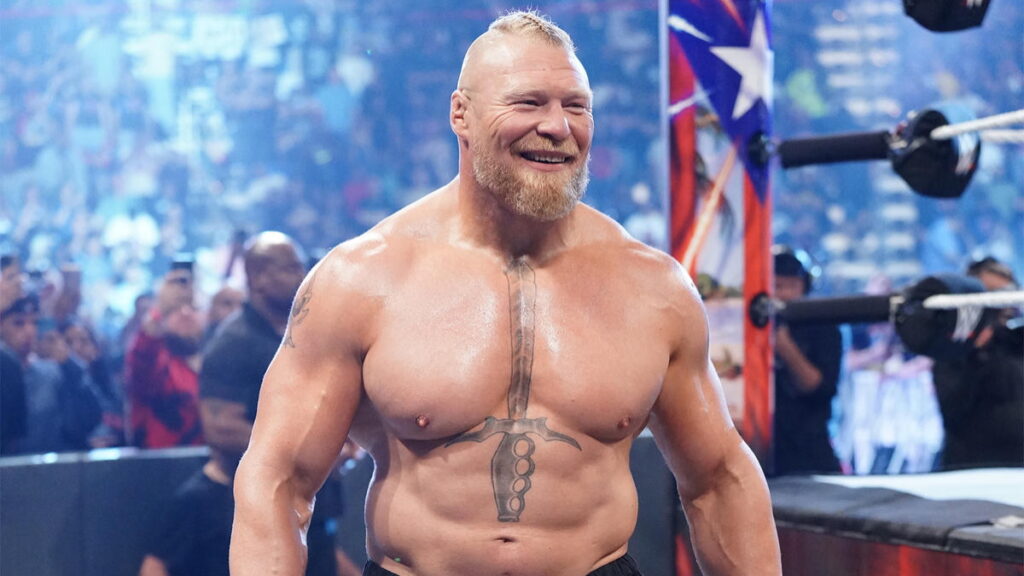
Is Brock Lesnar worth the inflated salary he gets from WWE? – Neil Adshead
He is according to WWE, otherwise they wouldn’t have given him a raise when they renewed his contract two years ago.
However, Lesnar is not the top merchandise seller in the company (a study at the end of 2016 using Google Shopping metrics ranked him in ninth place, behind the likes of Roman Reigns, the NXT brand and the Bella Twins), he barely makes a difference to TV ratings, and his heavily-promoted pay-per-view main event clashes with Samoa Joe and Braun Strowman did little to shift Network numbers.
Lesnar is undoubtedly a valuable asset to the company and someone whom WWE can build intrigue-generating programs around, but is he worth the massive financial outlay? Purely from a business perspective, probably not.
After having my eyes opened to Japanese wrestling for the first time by Wrestle Kingdom 12, can WTM recommend any other matches to hunt down from the Far East? – Callum Madley
Certainly, though this is a very short list compared to the hundreds of world-class bouts that have taken place in Japan over the past several decades.
From 2017 alone there were dozens of incredible clashes, most notably the industry-changing Kazuchika Okada vs. Kenny Omega trilogy from 4/1, 11/6, and 12/8. Omega’s G1 Final outing with Tetsuya Naito on 13/8 was also breathtaking. For more from Okada, hunt down his 9/4 bout with Katsuyori Shibata and his near-perfect series with Hiroshi Tanahashi on 6/4/13, 14/10/13, and 4/1/16.
Going back further, Mitsuharu Misawa’s war of attrition against Toshiaki Kawada at AJPW’s 3/9/94 Budokan Hall show is one of the all-time classic wrestling matches. Any of Misawa’s meetings with Kenta Kobashi are worth a watch, the best of which are probably a 1/3/03 meeting in NOAH and an 11/6/99 collision from AJPW. Another cracking Kobashi match comes opposite powerhouse Kensuke Sasaki on NOAH’s 18/7/05 show in front of 62,000 at the Tokyo Dome. That match features the longest and most brutal chop battle you will ever see.
Over in the junior heavyweight ranks, KUSHIDA’s Best of the Super Juniors victory over Will Ospreay on 3/6 is one of the greatest aerial battles of modern times. Ospreay’s meetings with Ricochet in the tournament on 25/5/16 and 18/5/17 both set a new bar for what is expected from high flyers. Before they came along, El Samurai and Koji Kanemoto were thrilling fans in the same competition two decades earlier (5/6/97), as were Wild Pegasus (Chris Benoit) and The Great Sasuke three years prior in the Super J Cup (16/4/94).



Comments.
Loading comments…